Home/About Us

About Motorcycle Repair School

Who we are, why we started, and what drives us to keep teaching practical mechanics to curious people every day.

Making Mechanical Knowledge Accessible

Motorcycle Repair School was founded on a straightforward belief: that anyone willing to learn — regardless of prior experience — can develop genuine mechanical competence with the right instruction and enough hands-on practice.

For too long, motorcycle repair felt like a closed trade. Knowledge passed through informal networks, and those outside those networks were left guessing. We built a structured, transparent curriculum that opens that knowledge up — explained clearly, practiced deliberately, and grounded in how motorcycles actually work.

We don't promise shortcuts or instant expertise. What we offer is a thoughtful learning environment, patient instructors, and real equipment to work on.
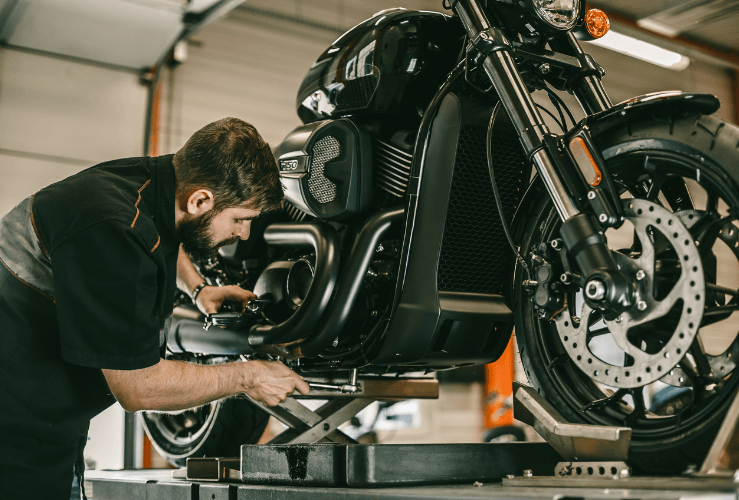
Instructor demonstrating technique

What We Stand For

Honesty Over Hype

We don't make guarantees about career outcomes or income. We focus on helping you become a capable, confident mechanic — what you do with those skills is up to you.

Safety as a Foundation

Every procedure taught here begins with safe practice. Good safety habits aren't a formality — they prevent injury and protect the machine you're working on.

Fundamentals First

Advanced skills are built on solid basics. We never skip steps, and we never assume a student knows something they haven't been taught.

Hands-On Practice

Theory is important, but the real learning happens when you're holding a caliper, adjusting a valve, or tracing an electrical fault on actual equipment.

Curiosity & Understanding

We encourage students to ask why, not just how. Understanding the principles behind a repair makes you a much better diagnostician in the long run.

Inclusive Learning

Anyone who wants to learn is welcome here — regardless of background, experience level, or the kind of motorcycle they ride. We meet students where they are.

Teaching Methodology

Our approach draws from vocational education principles — structured, sequential, and grounded in real-world application.

Our curriculum is carefully sequenced so that each lesson builds logically on the previous one. A student learning about carburetors, for example, will first understand how air-fuel mixing affects combustion, then how the carburetor circuit works, and only then disassemble and service one. This sequence prevents the confusion that comes from trying to learn procedures without understanding the underlying system.

Before students attempt any procedure, an instructor demonstrates it completely while narrating each step and the reasoning behind it. Students are encouraged to ask questions during the demonstration. Only after the demonstration is complete do students attempt the procedure themselves with the instructor available for guidance.

We deliberately limit group sizes so that instructors can give meaningful feedback to each student. In a large group, it's easy for students to fall behind or practice an incorrect technique without correction. Small groups allow the kind of individual attention that makes a real difference in skill development.

Skills erode without reinforcement. Our curriculum revisits key techniques in later sessions, often in new contexts. A student who learned to bleed brakes in one module will encounter that skill again when studying hydraulic clutch systems — reinforcing the procedure and deepening understanding simultaneously.

How We Developed

2012
First Workshop Sessions

Robert Hayes began hosting informal Saturday workshops in his garage, teaching basic maintenance to friends and neighbors who owned motorcycles but didn't know how to care for them.

2015
Formal Curriculum Developed

Demand outgrew the garage format. A proper curriculum was written, covering safety, engine basics, fuel systems, and electrical fundamentals in a logical sequence.

2017
First Dedicated Workshop Space

We moved into a proper facility with motorcycle lifts, tool stations, and dedicated learning areas for electrical and fuel system work.

2019
Curriculum Expanded

Advanced modules added covering suspension setup, engine rebuilds, and fuel injection systems. Lisa Chen and James Ortega joined the instructional team.

2022
Online Resources Launched

We began publishing educational articles, diagnostic tools, and interactive quizzes to support students between sessions and reach learners who couldn't attend in person.

2025–Present
Continued Growth

Over 4,500 students trained across all programs. We continue refining the curriculum based on student feedback and developments in motorcycle technology.

Program Coverage Areas

Engine Systems95%
Fuel & Carburetors90%
Electrical Diagnostics85%
Suspension & Chassis80%
Brake Systems92%
Mechanic working on engine